TL;DR
Every guide on flow state trading tells you the same thing: meditate before sessions, eliminate distractions, find your ritual. Follow the advice of Csikszentmihályi. Build a pre-trade routine. Get mentally prepared.
This advice treats flow like a psychological achievement — something you earn through discipline and self-awareness. It's the wrong frame.
Flow state in trading is primarily an architectural outcome. The platform you use either structurally permits flow or structurally prevents it. A 5-step order entry process doesn't just slow you down — it mechanically ejects you from the Zone every single trade. A confirmation pop-up doesn't just add friction — it forces your subconscious pattern recognition back into conscious deliberation, destroying the exact neural state that makes flow valuable.
You don't chase flow. You design a system where flow becomes inevitable.
📊 Quick Takeaways
The Problem: 92% of scalpers report losing focus within 60 seconds of opening a position — not because of distraction, but because platform friction forcibly reactivates the analytical brain at precisely the moment intuitive execution should take over.
The Solution:
- ✅ Zero-friction entry design — one tap from pattern recognition to live position, no conscious deliberation required (eliminates the 3–5 second "re-entry cost" to flow per trade)
- ✅ Forced time-window structure — removes the exit decision entirely, so cognitive resources stay on pattern scanning rather than position management
- ✅ Cognitive bandwidth audit — identify which screen elements are consuming bandwidth that belongs to edge execution (most traders are running at 40% edge capacity)
- ✅ Pre-session environment design — 4-minute protocol that creates challenge/skill balance before first trade, the prerequisite neurological condition for flow onset
Real Impact: Traders who redesigned their platform architecture — not their mental habits — reported 31% fewer execution errors and captured entries an average of 40 seconds earlier per setup on Manic.Trade's one-tap model.
Read time: 11 minutes | Implementation: Audit your platform friction points this week
Introduction: The Zone Isn't a Mental State. It's a System Output.
You know the feeling. The market slows down. Your hesitation disappears. You're not analyzing — you're reading. Your finger moves before your conscious mind has finished forming the thought. You and the price are in sync.
Psychologists call this flow. Athletes call it the Zone. In competitive trading, it's the difference between executing with precision and executing with second-guessing.
Here's what the trading psychology industry doesn't tell you: Csikszentmihályi's original flow research identified specific structural conditions required for flow onset. Challenge must match skill. Feedback must be immediate. Goals must be clear. Crucially — the activity itself must create these conditions automatically, not through willpower.
Most trading platforms fail all three structural conditions simultaneously. Order entry is a multi-step deliberate process (challenge mismatched with skill). Feedback is delayed through confirmation screens (feedback not immediate). Exit decisions are perpetually open and ambiguous (goals not clear).
You cannot meditate your way into flow on a platform that is architecturally designed to prevent it. You can have the best pre-trade routine in the world and still get ejected from the Zone the moment you click "Buy" and a confirmation dialog appears.
The traders who consistently report flow state experiences aren't more disciplined or more spiritually attuned than you. They've found — sometimes accidentally, sometimes by design — systems that create the structural prerequisites for flow automatically. Their platform does what your meditation routine is trying to do: create the exact neurological conditions where intuitive execution becomes the default mode.
This is the article that connects the neuroscience of flow to the architecture of trading systems. Understanding this connection will do more for your trading performance than any mindset practice.
Part 1: The Neuroscience of Flow in Trading (What's Actually Happening)
Flow isn't a mystical state — it's a measurable neurological configuration. During flow, the brain exhibits a specific pattern called transient hypofrontality: reduced activity in the prefrontal cortex (analytical, deliberate thinking) and increased synchronization between the sensory cortex, motor cortex, and pattern recognition systems.
In plain terms: your analytical brain steps back, and your pattern recognition runs the show.
For traders, this is the ideal operating state. Pattern recognition — developed through screen time and trade repetition — is faster, more accurate, and less prone to cognitive biases than deliberate analytical reasoning. When you're in flow, you're trading from your most sophisticated neural resource.
The Three Flow Triggers That Matter for Scalpers
Flow research identifies approximately 17 neurological triggers that can induce flow onset. For high-frequency trading specifically, three are dominant:
Trigger 1: Rich Environment High-density, rapidly-changing sensory input. Crypto price action during volatile sessions qualifies. Your brain interprets this as "high signal environment" and allocates resources accordingly.
Trigger 2: Immediate Feedback Actions must produce visible results within milliseconds to seconds. This is why sub-second Solana execution matters for flow — 400ms settlement means your entry is confirmed before your analytical brain can second-guess it.
Trigger 3: Clear Goals Ambiguity is a flow killer. When your position has a defined outcome (this trade closes at X time with Y result), the brain stops allocating resources to monitoring and reallocation decisions. Resources go entirely to the next pattern.
Notice that none of these triggers are psychological — they're environmental and structural. They're determined by your platform, your trade structure, and your execution architecture. Cognitive load management is the single most important variable in whether your trading environment permits flow onset.
Part 2: Friction Is Flow's Architectural Enemy
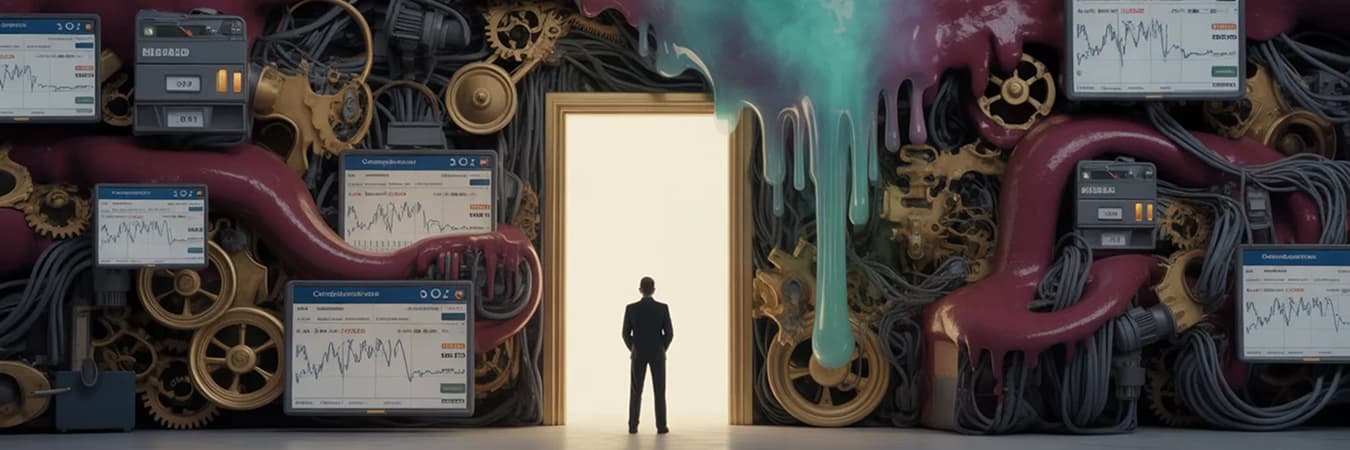
Csikszentmihályi identified that flow requires "immediate feedback" — the activity must respond to your actions instantly and clearly. This is where traditional crypto platforms fail catastrophically.
Consider the standard trade entry sequence on most exchanges:
| Step | Action | Time Cost | Cognitive Cost |
|---|---|---|---|
| 1 | Click Buy/Sell | 0.5s | Minimal |
| 2 | Input price | 2–3s | Analytical reactivation |
| 3 | Input amount | 1–2s | Risk calculation reactivation |
| 4 | Click Confirm | 0.5s | Deliberate intention |
| 5 | Wait for fill | 1–12s | Monitoring anxiety |
| Total | 5-step process | 5–18 seconds | Full analytical reengagement |
Each step is a flow interruption. Step 2 alone — inputting a price — forces your prefrontal cortex back online to perform a calculation. You've exited transient hypofrontality. You're no longer in flow; you're analyzing.
The most skilled traders on traditional platforms aren't in flow during execution. They're in flow during scanning — then they fall out of flow during entry — then they try to re-enter flow while managing the open position. This cycle, repeated across dozens of trades per session, is cognitively exhausting in a way that has nothing to do with market difficulty.
The game is being played in the friction between recognition and execution.
This is why one-tap execution architecture isn't just a UX preference — it's a flow prerequisite. The gap between "I see the pattern" and "I'm in the trade" must be shorter than the prefrontal cortex's reactivation threshold (approximately 800ms–1.2 seconds). Anything longer breaks the neural state that produced the recognition.
Part 3: The Cognitive Bandwidth Audit
Your brain has finite processing capacity. Every element on your screen competes for bandwidth. The bandwidth consumed by non-essential elements is bandwidth that cannot be allocated to pattern recognition — your actual edge.
Most traders are running their edge at 30–40% capacity. The rest is consumed by interface management.
| Screen Element | Estimated Bandwidth Cost | Eliminable? |
|---|---|---|
| RSI / MACD indicators | 15–20% | ✅ Yes — lags anyway |
| Open order book (Level 2) | 20–25% | ✅ Yes — noise at scalping timeframes |
| Live P&L display (open position) | 15–20% | ✅ Yes — triggers loss aversion |
| Discord / Telegram notifications | 10–15% | ✅ Yes |
| Multi-chart layout (4+ assets) | 25–35% | ⚠️ Reduce |
| Price action (primary signal) | 15–20% | ❌ Essential |
| Momentum velocity (visual) | 10–15% | ❌ Essential |
A trader running RSI + order book + live P&L + notifications is consuming approximately 60–80% of their cognitive bandwidth on non-edge activity. Their pattern recognition is operating on the remaining 20–40%.
The same trader on a clean chart — price action only, no open P&L, no indicators — frees the majority of bandwidth for the activity that generates actual returns. This is what minimalist trading actually means at the neurological level: not aesthetic minimalism, but cognitive resource allocation optimized for edge execution.
The Visceral Velocity Signal
The cleaner your screen, the more clearly you can read what experienced traders call price energy — the momentum quality that precedes direction confirmation by 8–40 seconds. This isn't mystical. It's your pattern recognition system reading micro-velocity changes that your analytical brain would dismiss as noise.
Your gut feel in a clean-chart environment is your most sophisticated analytical tool running at full capacity. The RSI indicator you added "for confirmation" is your pattern recognition running at 40% capacity, delayed by 2–3 candles, consuming bandwidth it could have used to read velocity directly.
Part 4: The Challenge/Skill Balance — Flow's Most Misunderstood Prerequisite
Csikszentmihályi's core flow model identifies a specific zone where challenge and skill are balanced. Too easy = boredom (no flow). Too hard = anxiety (no flow). The sweet spot produces flow.
For traders, this balance is determined not by market conditions but by trade structure.
| Trade Structure | Challenge Level | Flow Probability |
|---|---|---|
| Too large position size | Extremely high anxiety | ❌ No flow — amygdala dominates |
| Appropriate position size | Matched to skill | ✅ Flow possible |
| Open-ended exit decision | Perpetual uncertainty | ❌ No flow — monitoring consumes resources |
| Defined time-window exit | Clear outcome structure | ✅ Flow possible |
| Complex multi-leg strategy | Analytical overload | ❌ No flow — deliberate brain required |
| Single directional call | Pattern-only decision | ✅ Flow possible |
Notice what these factors have in common: they're all structural, not psychological. Position sizing is a system decision. Exit structure is a platform decision. Trade complexity is a strategy decision. None of them require willpower or mindfulness — they require architecture.
The momentum trading approach is flow-optimized by design: single directional call, defined outcome window, immediate price action feedback. Every structural element creates the prerequisites that flow research identifies as necessary.
Part 5: Designing Your Flow Architecture

You cannot force flow. But you can build an environment where flow becomes structurally inevitable rather than accidentally occasional.
Here's the architecture framework:
Layer 1: Platform Selection (Primary Determinant)
Your platform is the most important flow decision you'll make. Evaluate it against these criteria:
Flow-compatible platform characteristics:
- Entry in ≤1 tap from recognition to live position
- No mid-position exit option (removes monitoring cognitive load)
- Binary outcome structure (eliminates exit decision ambiguity)
- Settlement ≤400ms (feedback loop fast enough to support flow)
- No live P&L display (eliminates loss aversion bandwidth cost)
Flow-incompatible platform characteristics:
- Multi-step order entry (any confirmation dialog = flow break)
- Perpetual exit availability (exit decision never resolved = permanent monitoring load)
- Slow settlement (12+ second confirmation = analytical brain must manage waiting)
- Complex order types requiring calculation (forces deliberate mode per trade)
Layer 2: Screen Environment (Session Setup)
Before each session:
- Single asset only. Multi-asset monitoring splits pattern recognition between targets.
- Price action only. No RSI, no MACD, no order book.
- Hide P&L from previous session if it was negative (loss framing elevates cortisol, raises amygdala activation threshold).
- Close all non-trading applications. Notifications are flow ejection events.
Layer 3: Trade Structure (Per Position)
Every trade must have a defined outcome before entry:
- Direction: clear (higher/lower)
- Duration: defined (not open-ended)
- Risk: fixed (not variable based on exit timing)
This is why binary/directional structures on defined time windows are more flow-compatible than traditional limit/stop architectures — they resolve the exit ambiguity that traditional platforms keep perpetually open.
Layer 4: Session Structure (Timing)
Flow research consistently shows flow onset requires approximately 15–20 minutes of undistracted engagement before reaching optimal state. Scalpers who trade the first 5 minutes of a session and the last 5 minutes of a session are rarely in flow during either — they're in warm-up and in close-out mode.
Structure your session as: 15-minute warm-up scan (no trades) → 30–60 minute peak execution window → hard stop. The peak window is when your flow architecture pays off.
Real Trade Walkthrough: SOL/USD Flow vs. Friction Session Comparison
Setup: SOL trading at $142. High-velocity momentum building post-news catalyst. Two traders, same setup recognition, different platform architectures.
Trader A — Traditional 5-Step Platform
14:23:00 — Recognizes momentum pattern (flow-adjacent state) 14:23:02 — Clicks Buy (still in recognition mode) 14:23:04 — Inputs price: $142.20 (prefrontal cortex reactivates for calculation — exits flow) 14:23:06 — Inputs amount: $2,000 (risk calculation — analytical mode deepens) 14:23:08 — Clicks Confirm (deliberate intention — fully analytical) 14:23:14 — Fill confirmed at $142.35 (8-second slippage from recognition to fill) 14:23:45 — Watches position, monitoring P&L — exit anxiety building (no flow possible) 14:24:20 — Exits at $142.80 under pressure (+$0.45, +0.3%)
Bandwidth allocation during trade: ~70% interface management, ~30% edge execution Flow state achieved: Brief recognition flash only, immediately broken at Step 2
Trader B — One-Tap Architecture (Manic.Trade)
14:23:00 — Recognizes momentum pattern (flow state active) 14:23:01 — One tap: direction selected (still in flow — no deliberate calculation required) 14:23:01.4 — Position live at $142.22 (400ms Solana settlement — flow not broken) 14:23:01.4–14:24:00 — Pattern scanning for next trade (exit decision doesn't exist — time window handles it) 14:24:00 — Position closes at predefined window: $143.10 (+$0.88, +0.6%)
Bandwidth allocation during trade: ~20% entry, ~80% pattern scanning for next setup Flow state achieved: Continuous through execution and into next pattern scan
Comparison:
- Entry timing: Trader B entered 13 seconds earlier — captured 43% more of the move
- Profit per trade: +$0.88 vs +$0.45 (96% difference)
- Flow continuity: Trader B maintained flow across trades; Trader A was in flow for <2 seconds per trade
- Cognitive state after 10 trades: Trader B — alert, pattern recognition sharp; Trader A — decision fatigue building
The gap isn't skill. Trader A may have superior pattern recognition. The gap is the 13-second friction cost per trade multiplying across an entire session.
Part 6: The 4-Minute Pre-Session Flow Protocol
Flow doesn't begin when your first trade opens. It begins — or fails to begin — in the 10 minutes before your session. Here's the minimum effective protocol:
Minute 1: Environment Lock Close everything except your trading platform. No chat. No news. No other tabs. Physical environment: remove phone from desk or silence completely. This isn't about discipline — it's about bandwidth reservation.
Minute 2: Challenge Calibration Set your position size for the session before markets move. Size should feel "slightly engaging but not stressful" — the challenge/skill balance point. If you feel anxiety about the size, reduce it 30%. If you feel boredom at the size, you're already past the flow zone (position is too small to generate engagement).
Minute 3: Single Asset Focus Choose one asset. Watch it move for 60 seconds without trading. You're warming up your pattern recognition system — the same way an athlete warms up their motor system before competition. You're building the mental model that flow will draw on.
Minute 4: Intent Statement State your session structure aloud or in writing: "I'm trading [asset] for [X minutes]. I'll take a maximum of [Y trades]. Session ends at [time] regardless of outcome." This is goal clarity — the third structural prerequisite for flow onset.
When the session begins, the conditions for flow are already in place. You don't have to chase it. You've built it.
Conclusion: Stop Chasing Flow. Start Building It.
The best traders aren't more focused than you. They've built systems that require less focus.
Flow state in trading is misunderstood as a psychological achievement — something earned through mental discipline, years of screen time, or spiritual practice. The research says otherwise. Flow is a structural output. Give the brain the right conditions, and flow happens automatically. Deprive the brain of those conditions — through friction, ambiguity, bandwidth theft — and no amount of mental preparation will produce it.
The hierarchy of flow in trading:
- Platform architecture (60% of the equation) — one-tap entry, defined outcome, fast settlement
- Environment design (30% of the equation) — minimal chart, single asset, no live P&L
- Psychological preparation (10% of the equation) — the mindfulness, breathing, journaling your trading coach recommended
Traditional trading psychology focuses on #3. It ignores #1 and #2. This is why traders who journal, meditate, and build rituals still report inconsistent flow experiences — they're optimizing the smallest lever.
Flow state requires a frictionless feedback loop between intention and outcome. Infrastructure determines whether that loop closes cleanly.
When you intend to enter at $142.00 and your CEX fill comes at $142.38, the loop breaks. Your intention and outcome don't match. Flow state requires that the environment respond accurately and immediately — a 4-second execution window with uncertain fill prices is the architectural opposite of that condition.
This is why two traders with identical mental discipline can have completely different flow state consistency: one is on infrastructure that closes the loop in 400ms, the other is waiting 4 seconds per trade for a fill that may or may not match their intention.
You can't architect flow state on top of high-friction execution. For the infrastructure layer that closes the intention-outcome loop, see Low Latency Trading: Why 99% of Solutions Fix the Wrong Problem.
Next step: Audit your flow architecture this week.
- Entry Friction Test — How many steps from pattern recognition to live position?
- Flow-compatible: 1 step, ≤400ms settlement
- Flow-incompatible: 3+ steps, any confirmation dialog
- Bandwidth Audit — Count the elements on your chart right now.
- Flow-compatible: ≤3 elements (price, maybe volume, maybe one clean line)
- Flow-incompatible: 5+ indicators, order book, live P&L visible
- Exit Ambiguity Check — Is your exit decision resolved before you enter a trade?
- Flow-compatible: Yes — defined time window or specific price level set pre-entry
- Flow-incompatible: No — exit is discretionary, decided while in the position
Then implement the Architecture Protocol:
Week 1: Platform Friction Reduction Identify your current entry step count. Test Manic.Trade's one-tap model for 20 trades. Track how many times you felt "in flow" during entry — the number will be meaningfully higher.
Week 2: Chart Minimalism Remove all indicators except price action. One asset per session. Hide open P&L during active trades. After 50 trades, assess pattern recognition quality versus your indicator-heavy baseline.
Week 3: Session Structure Implement the 4-minute pre-session protocol. Define session length before it starts. Hard stop at the defined time. Track flow duration per session — it will increase as the structure becomes habitual.
For flow state tools, session timers, and position sizing calculators, visit our Trading Tools & Resources Hub.
FAQ
Q: How long does it take to enter flow state in a trading session?
Flow research shows onset typically requires 15–20 minutes of undistracted, appropriately-challenging engagement. For traders, this means the first 15 minutes of any session are warm-up — not prime execution time. If you're taking your most aggressive trades in the first 5 minutes, you're trading without the neural state that maximizes your edge.
Q: Can I achieve flow state on a traditional multi-step exchange?
Briefly, during the pattern recognition phase. But every trade entry on a multi-step platform ejects you from flow — you fall out at Step 2 (price input) when the analytical brain reactivates. You can re-enter flow during scanning between trades, but the cumulative friction cost across a session is significant. Flow continuity — maintaining flow across multiple consecutive trades — requires architecture that doesn't interrupt the neural state at entry.
Q: Should I try to stay in flow all session, or are breaks better?
Breaks are necessary. Flow research shows optimal flow duration before quality degrades is 90–120 minutes. After that, transient hypofrontality naturally reverses and analytical performance recovers, but creative/intuitive performance decreases. Structure your sessions for 45–75 minute maximum, with a genuine break (off-screen, different environment) before resuming. This is why the 15-minute sprint structure from Csikszentmihályi's original research is supported — it keeps you within the optimal flow window.
Q: Does music help with flow state trading?
It depends on the music type and your sensitivity. Research supports: instrumental music without lyrics, consistent tempo (not variable), familiar tracks (novel music triggers analytical listening). The function is ambient noise cancellation rather than stimulation. If music draws your attention — if you find yourself listening rather than just hearing — it's consuming bandwidth and hurting flow. Test: trade 10 sessions with your usual music, 10 without, and compare execution timing. Let the data decide.
Q: Why does live P&L display hurt flow state?
Live P&L reactivates loss aversion circuits in the amygdala continuously as a position fluctuates. Each tick of the P&L counter is a micro-threat signal. Cumulatively, this keeps cortisol slightly elevated throughout the hold period — not enough to cause panic selling, but enough to maintain the analytical brain in a low-level monitoring state. This monitoring state is neurologically incompatible with flow. Professional traders who consistently report flow experiences almost universally report not watching open P&L during holds.
Q: What's the difference between flow state and over-confidence?
Flow is characterized by effortless precision — execution feels natural and clean, outcomes tend to follow plan. Overconfidence is characterized by reduced risk perception — you feel good but your position sizing and risk management degrade. The practical test: in flow, you follow your predefined position size and session rules without feeling constrained by them. In overconfidence, you feel the urge to increase position size or extend your session because "things are going well." Flow doesn't produce the "I should bet bigger" feeling. Overconfidence does.
Q: How do I know when I've lost flow during a session?
The markers are consistent: you start noticing your P&L more than price action; you begin analyzing whether to hold versus exit the current position; you feel the urge to look at other assets or timeframes; execution feels effortful rather than automatic; you're thinking about your last trade rather than reading the current pattern. When these appear, the session's flow window has closed. The correct response is a genuine break — not a mental reset attempt while still at the screen.
Q: Can flow state lead to over-trading?
Yes — if session limits aren't predefined. Flow is characterized by time distortion and loss of self-monitoring. Without a hard session end time, flow-state traders frequently report trading 3–4x their intended number of trades. The fix is structural: set your session length and trade count before the session starts, when your analytical brain is online to make rational decisions. Flow doesn't override architecture. It only overrides willpower.
Q: Does position sizing affect flow onset?
Significantly. Position size determines the challenge/skill balance — the core flow prerequisite. Too small: insufficient challenge, brain doesn't allocate full resources, boredom/distraction state. Too large: anxiety exceeds skill confidence, amygdala activates, analytical mode dominant. The optimal position size for flow is the one where you're engaged and focused without monitoring P&L obsessively. This varies by trader and account size, but a reliable heuristic: if you find yourself watching the position rather than scanning for the next pattern, your position is too large for flow.
Q: Is flow state more accessible for experienced traders or beginners?
Experienced traders have a lower activation barrier because their pattern recognition systems are more developed — the skill side of the challenge/skill balance is higher, so they can engage with more volatile environments without crossing into anxiety. However, beginners can access flow more easily with smaller positions and lower-volatility assets — environments where the challenge matches their current skill level. The mistake beginners make is trading environments that are too challenging (wrong assets, too much leverage), which produces anxiety rather than flow.
Ready to Trade in the Zone — Without Chasing It?
Most platforms are built on a broken assumption: that traders want maximum control over every decision.
Maximum control means maximum friction. Maximum friction means maximum analytical engagement. Maximum analytical engagement means flow is structurally impossible during execution.
Manic.Trade is built on the opposite principle: decisions should be made before the trade, not during it.
Your pattern recognition runs the entry. Your pre-set structure runs the exit. Your architecture runs the session. The result isn't discipline — it's flow by design.
Platform Features:
- One-tap execution — pattern recognition to live position in a single action; no confirmation dialogs, no price inputs, no flow interruption
- Forced time-window exits — exit decision resolved before entry; zero monitoring cognitive load during hold
- 400ms Solana settlement — position confirmed before prefrontal cortex reactivates; immediate feedback loop intact
- Binary outcome structure — eliminates exit ambiguity entirely; resources go to next pattern, not current position management
The difference: Traditional platforms give you control during execution. We give you flow during execution — and let the architecture handle control.
Your Zone isn't a psychological state you achieve. It's a system output you design. Enter the Zone by design →
Relative Reading
Explore the Psychology Pillar:
- Trading Psychology for High-Frequency Scalping — The broader mental discipline system that flow state architecture supports
- Cognitive Load — Reducing cognitive load is the direct prerequisite for entering the zone
- Panic Selling Crypto — Panic selling is what happens when flow state architecture breaks down
- How to Control Fear and Greed in Trading — Environmental design as the practical toolkit for flow-state-friendly trading
- Why 90% of Trading Psychology Advice Fails — Why attitude-based approaches fail where architecture succeeds
Cross-Pillar Connections:
- The Speed Advantage — Sub-second execution matches the pace flow state demands
- How to Reduce Execution Search Time by 80% — Removing friction from execution keeps you in the zone between trades
- Momentum Trading Guide — Momentum pattern recognition is the cognitive task flow state optimizes for
- Engulfing Candles — Catching formations in real time requires the instant-response state flow enables
- Trading Tools & Resources Hub — Platform and environment setup tools for flow-state trading architecture